The Footpath Through a Working Landscape
A footpath through a working landscape can serve many routines. Learn how to read its uses and plan considerate visits around local work.
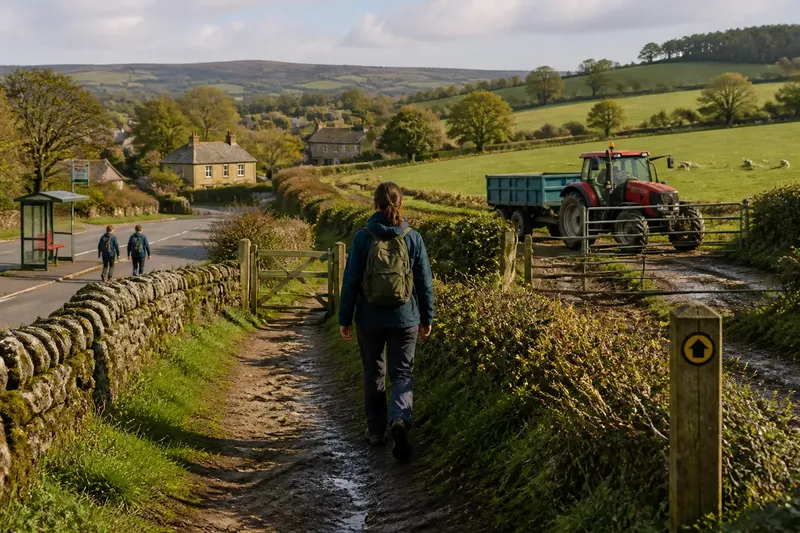
A footpath through a working landscape may be a school shortcut, a farm boundary, a route to a bus stop and a way to reach open countryside. Reading those roles together helps you use the path with care instead of assuming every marked route is a recreational trail. The useful question is not only where it goes, but what is happening along it during the week.
Read the route
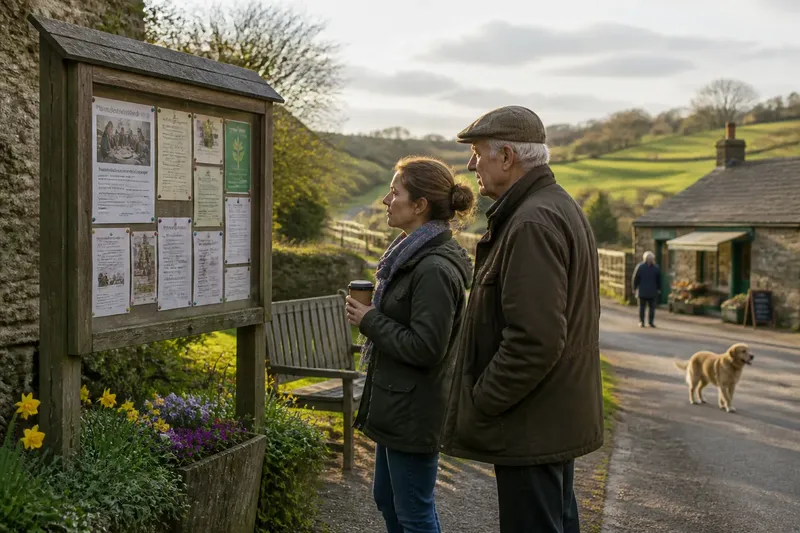
Start with the path’s endpoints. A lane leading to a village shop has a different daily rhythm from a track joining two fields, even if both are signed for public access. Notice nearby homes, gates, field entrances, bridges, bus stops and community buildings. These details suggest who may rely on the route and when it might be busy.
Then look at the ground and its edges. A narrow strip beside a hedgerow may keep walkers away from crops while leaving machinery room in the field. A surfaced lane may carry farm vehicles as well as people on foot. Mud, hoof marks, tire tracks or a recently moved gate can indicate active use, but none of these signs alone tells you who owns the land or what access is permitted.
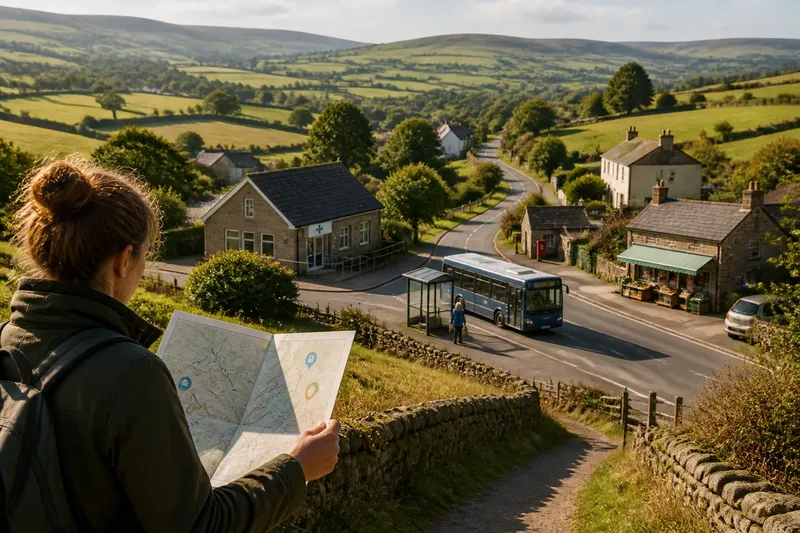
Where a map or sign is available, compare it with what you see. A mapped footpath can cross working land without becoming a public road, and a visible farm track is not automatically open to visitors. Follow local signs and stay on the marked route. For questions about access rights or restrictions, check the relevant local authority or land manager’s information; access rules and temporary arrangements vary by place.
Build a week around it
A weekly routine makes the route easier to understand without turning observation into an inspection. Choose an ordinary week, note the reason for each journey, and keep your observations simple. The point is to notice patterns that matter to your own use, not to track other people or infer more than the evidence supports.
- Monday: Walk the route for a practical purpose, such as reaching a bus stop or village amenity. Note where the path begins and ends, and which junctions are easy to miss.
- Tuesday: If you pass through again, notice whether the route is shared with vehicles, livestock or deliveries. Keep clear of working entrances and avoid blocking gateways.
- Wednesday: Look at the surface and drainage after ordinary use. A low, wet stretch may affect footwear or mobility, while a firm path may be easier for someone pushing a stroller.
- Thursday: Pay attention to signs, waymarkers and gate arrangements. If a sign is unclear, treat it as a prompt to check local guidance rather than as permission to improvise a new route.
- Friday: Consider who else needs the path: children walking to school, neighbors heading to a stop, or people tending nearby land. Leave room for others to pass and give animals space.
- Weekend: Use the route for a slower walk if appropriate, keeping the same access boundaries. Notice whether your recreational journey depends on the path’s practical role during the working week.
This is not a schedule to follow rigidly. If work, weather or a temporary notice changes conditions, adapt the journey or choose another route. A path can be useful on one day and unsuitable on another, without either judgment being permanent.
Notice overlapping uses
One route can carry several kinds of movement at once. A farmer may use a gate to move equipment; a resident may pass it on the way to a nearby service; a walker may see it as the start of a loop. These purposes are not interchangeable, but they can coexist when people recognize each other’s needs.
Imagine you use a marked path to reach a village stop, and one morning a farm vehicle is waiting at a field entrance. You pause on the path, leave the gateway clear and let the vehicle move before continuing. The expected observable result is straightforward: the entrance remains usable, and you can proceed without stepping into the field or creating a new route around the vehicle.
That kind of small adjustment is more useful than treating the landscape as a scenic backdrop. A field entrance is part of someone’s work, just as the path may be part of someone else’s daily journey. Think of the route like a shared hallway: people have different destinations, but keeping the passage clear lets each person use it.
Choose the right time?
When is a path busiest?
There is no universal busy period. A route near a school or bus stop may see concentrated movement around local routines, while a field-edge path may be affected by seasonal work or deliveries. Observe from the path itself and leave room for activity rather than trying to predict a fixed timetable.
Can I walk beside a field entrance?
Stay on the marked path and do not stand in a gateway or obstruct access. If a vehicle or livestock is moving through, wait where you can do so safely and follow any signs or directions from the person managing the land.
What if a route looks blocked?
Do not climb a barrier, cross a planted field or assume a closure is informal. Check posted information and local access guidance, then use a permitted alternative if the route is unavailable.
How can I tell whether a path is useful to neighbors?
Look at its connections to homes, stops, shops, schools and shared facilities, while avoiding assumptions about individual travelers. A route’s links can reveal its practical value even when you visit at a different time of day.
Keep useful observations
If you want to remember what you noticed, make a brief note about the route rather than recording people. Useful details include a confusing junction, a damaged waymarker, a difficult surface or a gate that appears hard to use. Describe what you can see and where it is, without assigning blame or claiming a legal status you have not checked.
For example, “the waymarker is difficult to see from the lane” is more actionable than “the route is badly maintained.” If you report a problem, send the location and observation to the relevant local authority or land manager. They can decide whether the sign, surface or access arrangement needs attention.
Reading a footpath through its connections changes how a familiar walk feels. The route is not just a line across land; it links errands, work, care and leisure, sometimes within the same short stretch. Keep that in mind when choosing where and when to walk, and the footpath through a working landscape becomes easier to use as part of the place rather than apart from it.